What testing revealed
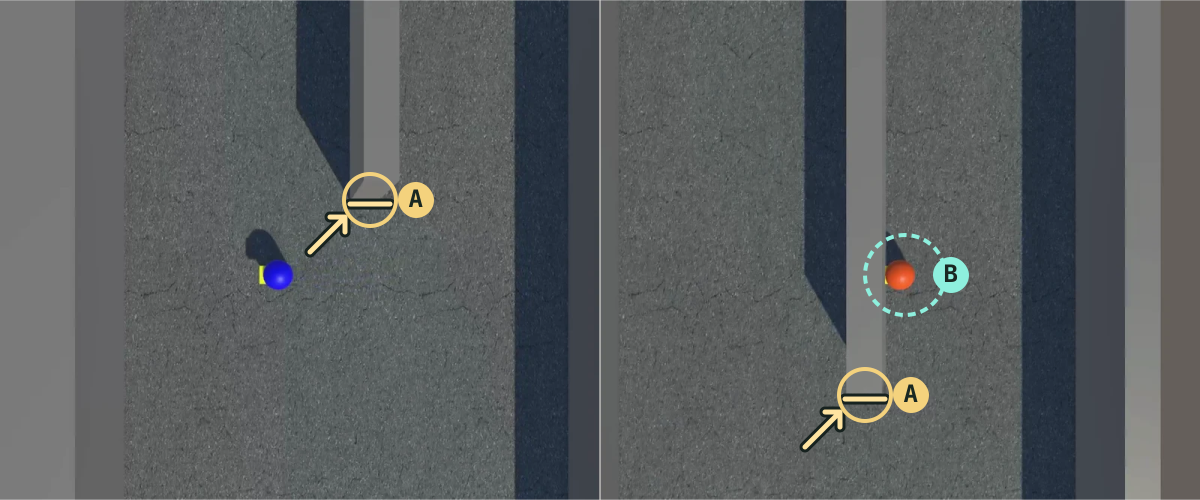
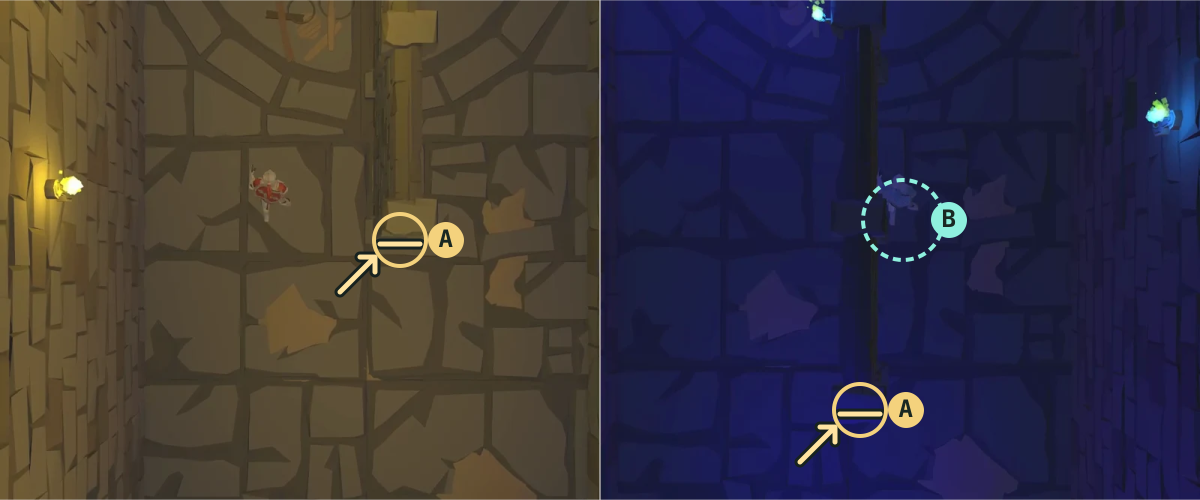
A tester reported spending around fifteen minutes before noticing that the walls had different lengths. The wall-length difference needed to be easier to notice.
INDEPENDENT GAME DEVELOPMENT / UNITY
A split-screen puzzle game in which the same movement input controls both characters simultaneously. I designed, programmed, tested, and released five levels built around the consequences of that shared input.
Play on itch.io ↗Developed as a game course project, Shadow Runner took me through proposal, proof of concept, prototype, Alpha and Beta testing, and release. I handled game design, programming, level design, testing, publishing, and trailer production.
Art and music use external assets. My work includes selecting and arranging those assets to support the levels and their visual communication.
01 / CORE MECHANIC
Shared input does not keep the characters in the same relative position. When a wall stops one character, the other can keep moving. The environment becomes a tool for changing their alignment.
I used the graybox to test whether shared controls, asymmetric walls, and linked switches could support a complete puzzle. Simple geometry kept the focus on the spatial relationships.
02 / LEVEL DESIGN
The levels explore shared movement through different combinations of space, switches, teleportation, boxes, and enemies.
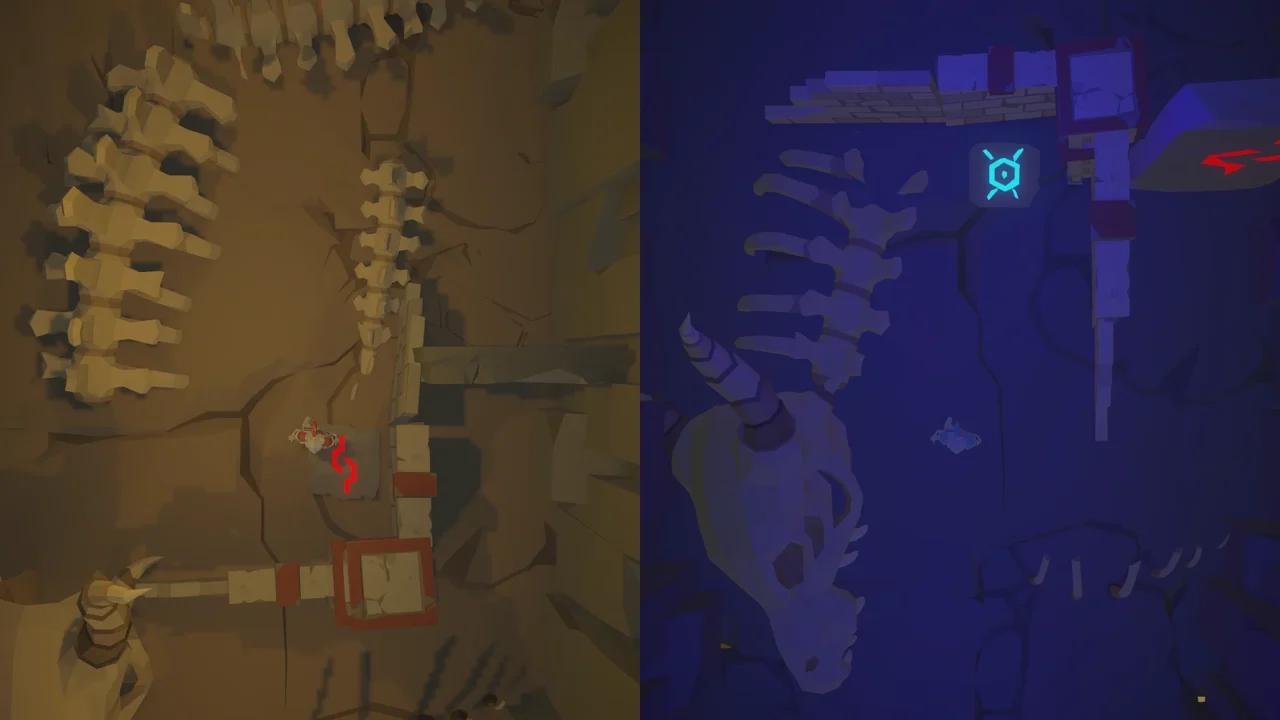
Different walls and linked switches introduce the need to watch both worlds.
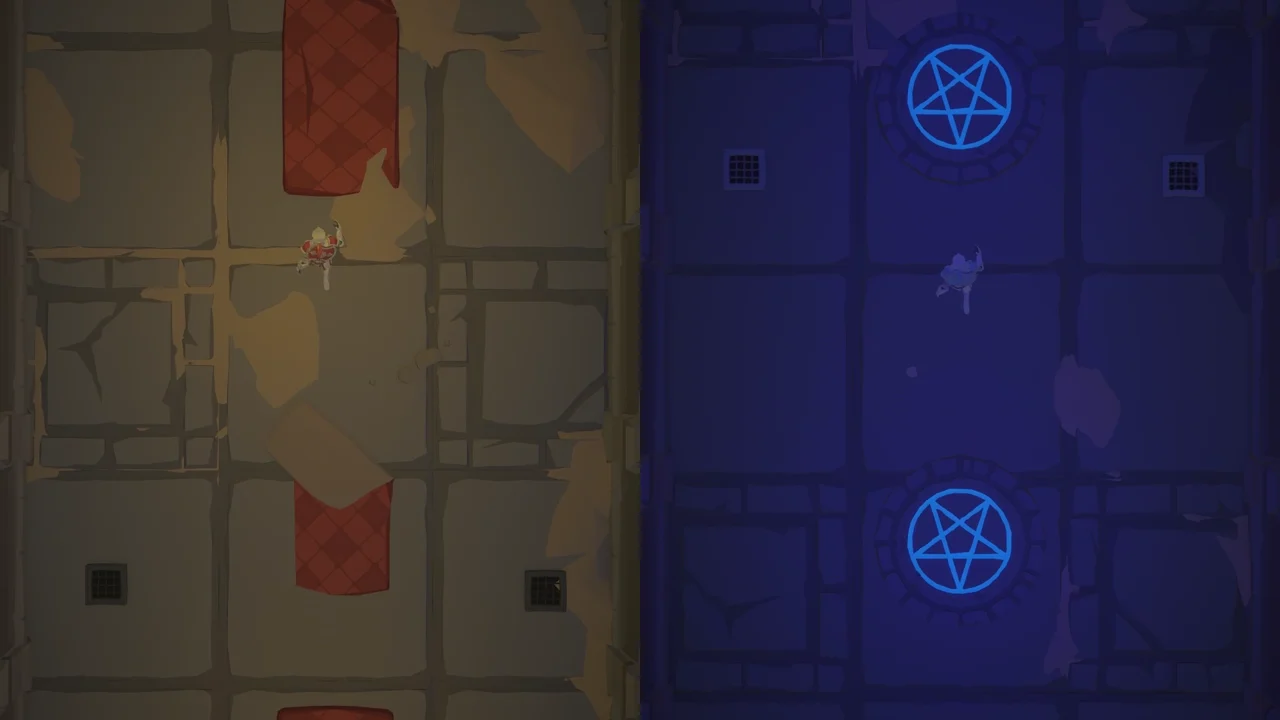
Teleportation changes the relationship between the two characters.
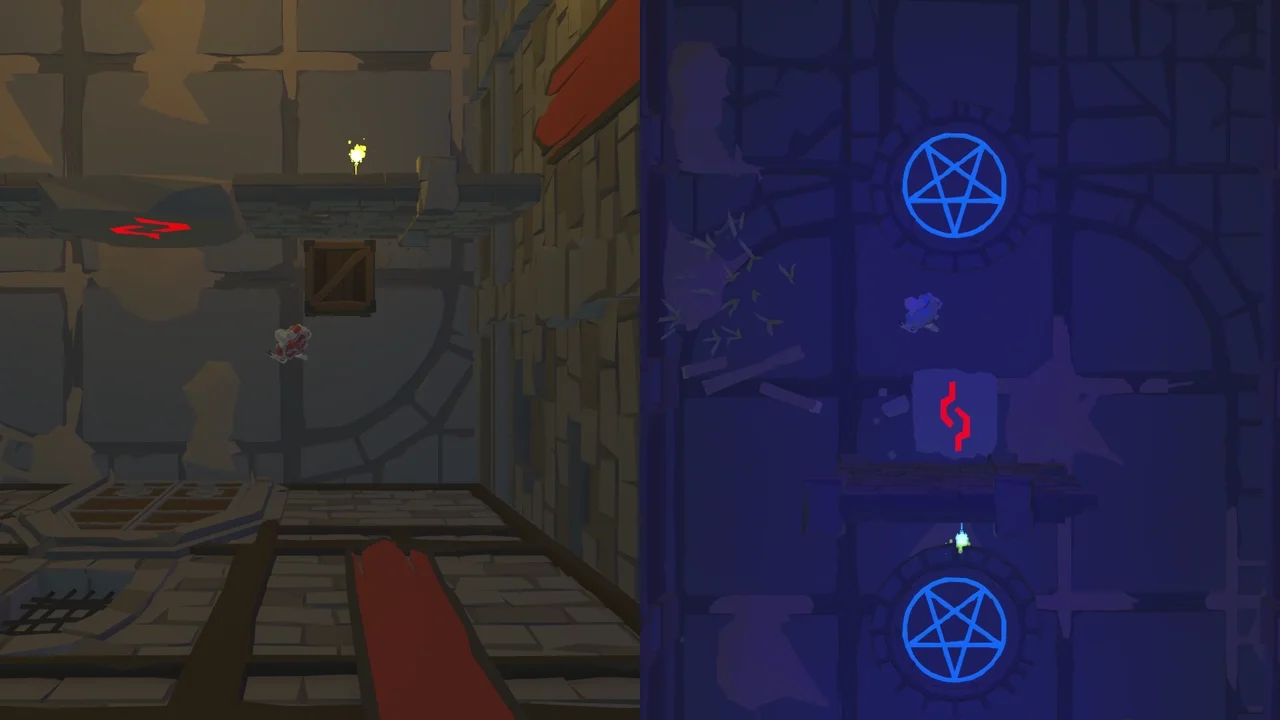
Boxes, switches, and teleportation bring multiple actions into one puzzle.
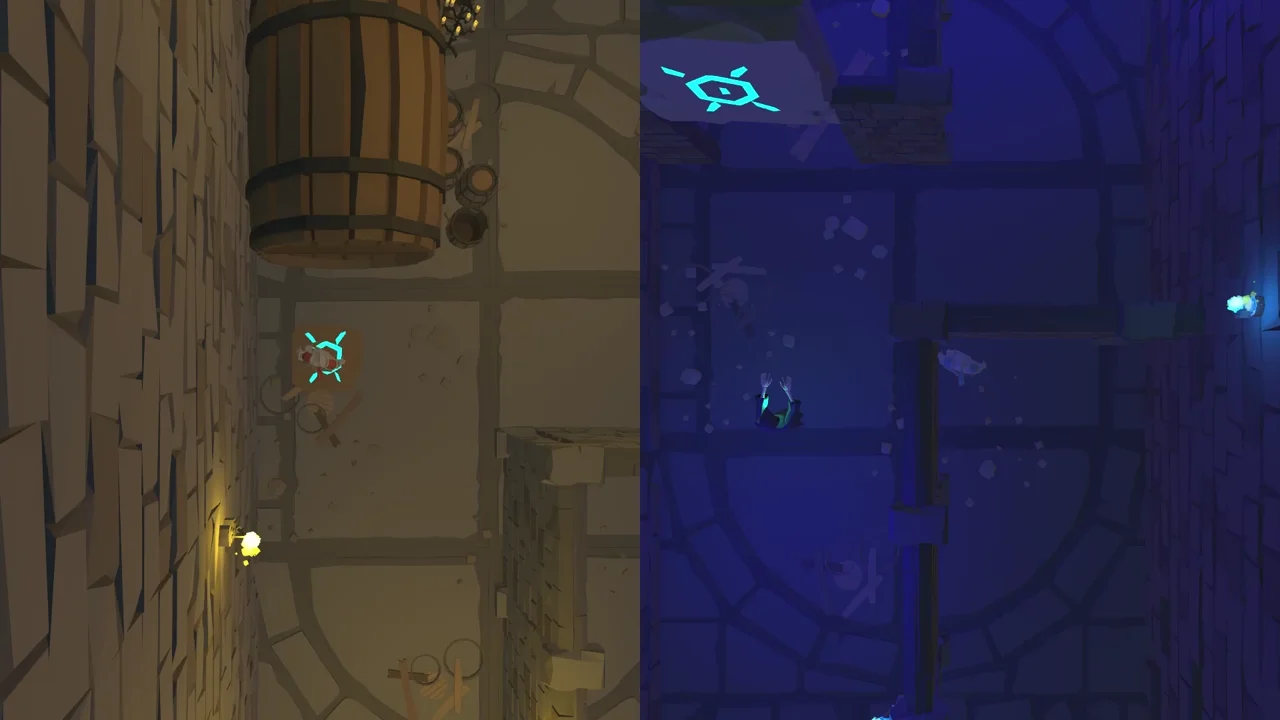
Different wall lengths create a safe position while the other character operates a trap.
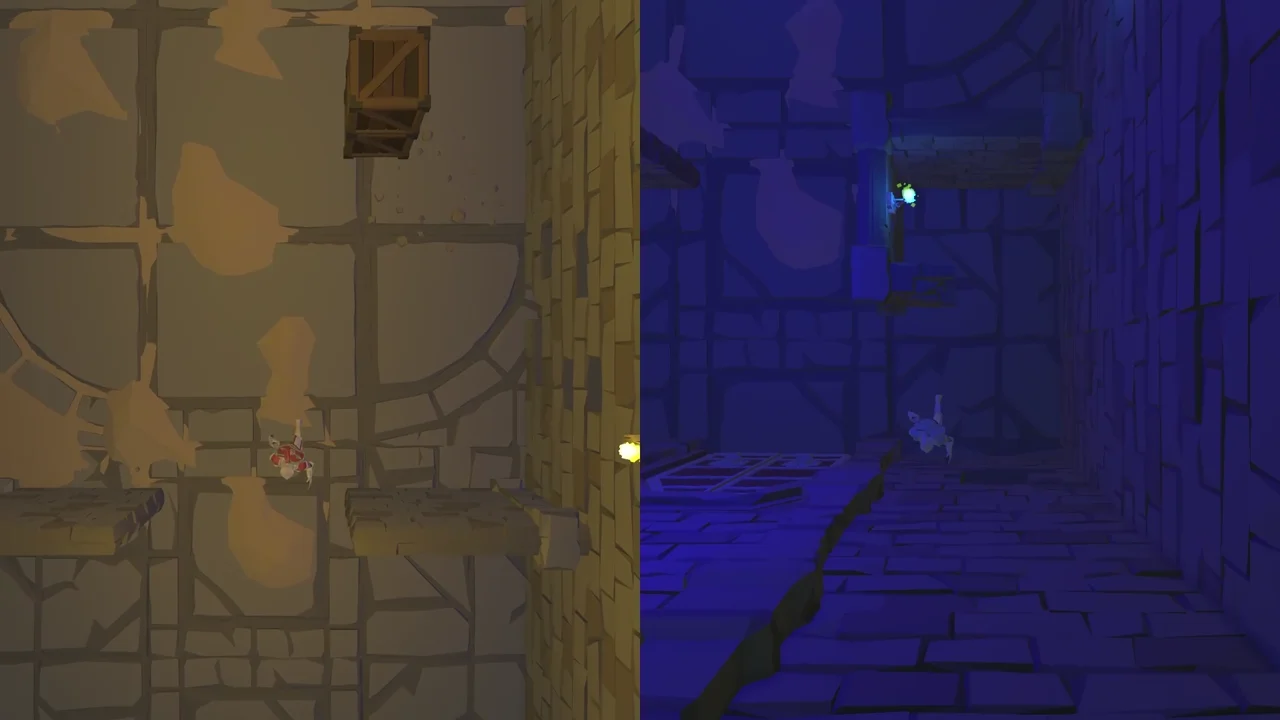
Moving boxes in one world must account for enemies and space in the other.
A CLOSER LOOK / LEVEL 04
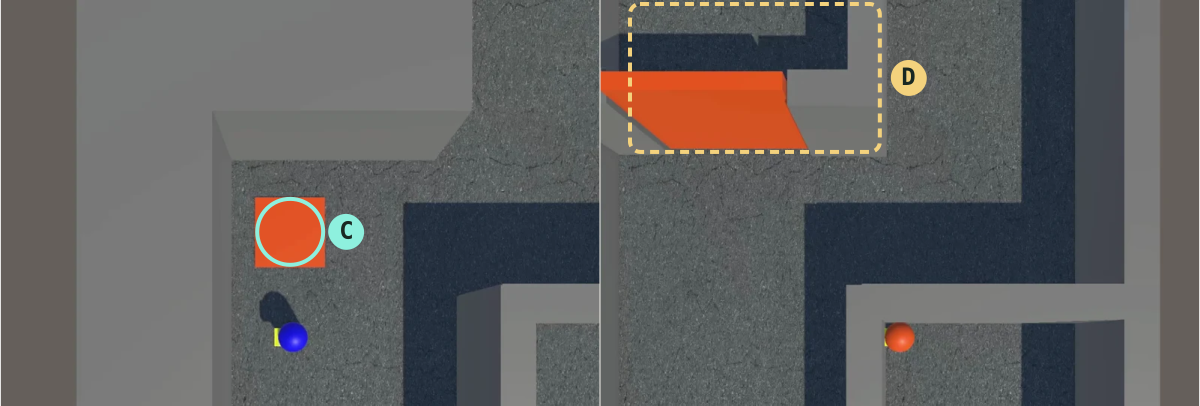
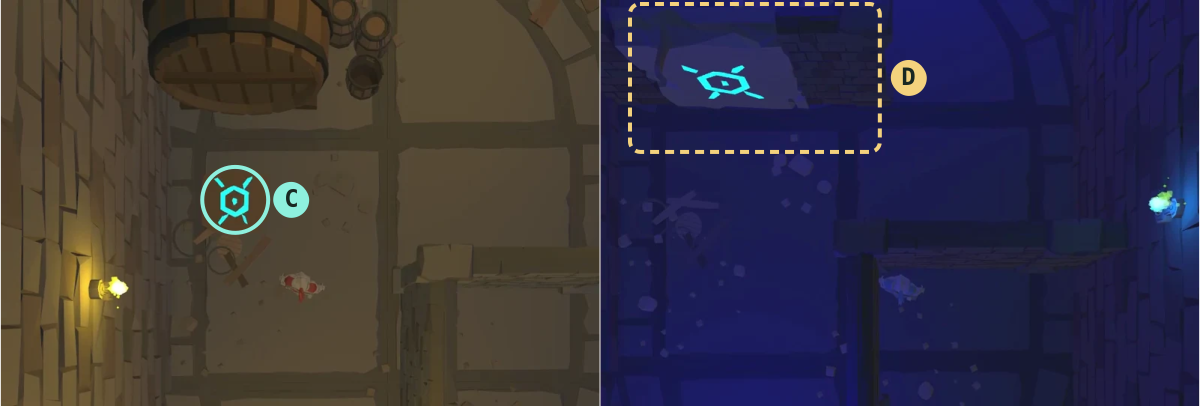
The fourth level asks the player to use unequal wall lengths to protect one character while the other operates a switch and traps an enemy. The solution depends on noticing a small but meaningful spatial difference.
01 / PROTOTYPE REAL WORLD / SHADOW WORLD
02 / RELEASE REAL WORLD / SHADOW WORLD
The player uses the longer wall to block the shadow character while the same movement input carries the other character toward the switch. This keeps one side safe while the other controls the enemy enclosure.
01 / PROTOTYPE REAL WORLD / SHADOW WORLD
02 / RELEASE REAL WORLD / SHADOW WORLD
A tester reported spending around fifteen minutes before noticing that the walls had different lengths. The wall-length difference needed to be easier to notice.
I used environment assets to make the walls more distinct. The aim was to help players notice the information needed to reason about the puzzle.
03 / PLAYTESTING & ITERATION
Peer reviews on macOS and Windows helped distinguish unclear information, awkward interaction, and changes that weakened the puzzle itself.
MOVEMENT & PUZZLE CONSTRAINTS
In the Alpha review, a tester found that Shift sprint let them outrun enemies in levels four and five and ignore the puzzles. A feature intended to improve movement had changed the conditions those levels relied on.
Decision: I removed sprint and reduced enemy speed. The aim was to preserve the need to solve the puzzle while giving players more time to act.
SUCCESS FEEDBACK
Players could solve a puzzle and still be unsure whether they had completed the level. I added a distinct completion sound and effects around the characters.
Design lesson: The sound and effects let players know they have triggered level completion.
04 / SCOPE & RELEASE
Early ideas included changing shadow size through lighting and a multi-light boss encounter. I narrowed the scope because synchronized control already offered enough room for a complete game.
That decision let me concentrate on five levels, scene presentation, feedback, testing, and a playable release. Taking the project through publishing and producing its trailer was part of the work, alongside building the game itself.
Knowing the solution made it easy for me to overlook the clues a new player might miss. Playtesting taught me that designing the puzzle also means making its key rules and spatial differences discoverable.
Play Shadow Runner ↗